jueves, mayo 22, 2014

Grafeno, el material del futuro

El grafeno es un material fascinante cuyas propiedades y posibles aplicaciones apenas se están empezando a conocer.
Se obtuvo por primera vez en 2004  y sus descubridores  Andre Geim and Kostya Novoselov  recibieron el premio Nobel en 2010.
Se había planteado su  existencia desde la década de los años 80 , pero  algunos modelos teóricos de sus propiedades se conocían desde los años 50.


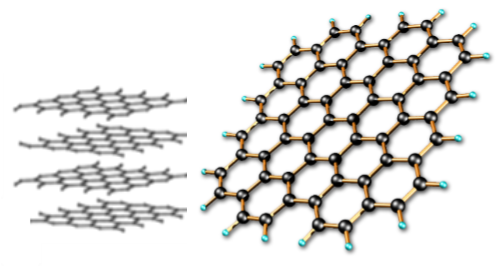
Estructuralmente simple: es una lámina de átomos de carbono que forman una malla hexagonal.
De hecho  es una lámina aislada de grafito.


Geim y Novoselov utilizaron este “equipo” para obtener sus primeras muestras de grafeno y depositarlas sobre una superficie de SiO, a partir de las cuales estudiaron experimentalmente algunas de sus propiedades más destacadas


 En el futuro lo encontraremos en:
· Pantallas flexibles
· Papel electrónico
· Refinerías de petróleo
· Dispositivos electrónicos
· Baterías
· Sensores.
· Aplicaciones médicas
….


miércoles, mayo 07, 2014

Jo ho veig i tu no


Polarització de la llum

La llum es una radiació electromagnètica que s’origina per l'oscil·lació d’un camp elèctric i un camp magnètic perpendiculars.  Aquests camps també son perpendiculars  a la direcció de propagació de la llum.


 L’orientació del camp elèctric (i del magnètic) no son constants i poden vibrar en qualsevol direcció  perpendicular a la de propagació.
Utilitzant filtres “POLARITZADORS” podem seleccionar una part de la llum amb una direcció concreta d’oscil·lació del camp elèctric. 
Si combinem dos filtres polaritzadors (depenent de la seua orientació) podem permetre o bloquejar el pas de la llum


Cristalls líquids 

El cristall líquid està format per molècules amb formes cilíndriques.


Aquestes molècules poden orientar-se unes respecte de les altres de diferents maneres.

L’orientació de les molècules de cristall líquid modifica el pla de polarització de la llum

Les molècules de cristall líquid en fase “nemàtica” contingudes entre dues plaques de vidre s’orienten en forma d'hèlix i “giren” el pla de polarització de tal manera que la llum pot travessar les dues làmines del polaritzador

Les molècules del “cristall líquid” canvien d’orientació al aplicar un camp elèctric entre les dos plaques de vidre de la pantalla. En aquest cas, amb l’orientació imposada, ja no es produeix el canvi de polarització i per tant l’analitzador bloqueja el pas de la llum   


Veure referencia (anglés) 

Píxels de color


Cada píxel de color d'un monitor LCD està format per tres punts minúsculs amb filtres dels tres colors bàsics: Roig, verd i blau (RGB)

Quan la pantalla s'il·lumina per darrere amb una llum blanca (blau clar a la imatge) cada filtre deixa passar la llum del seu color.

Com cadascú d’aquests punts es pot activar independentment, la combinació de llum dona sensació de color.

La il·luminació posterior de la pantalla era inicialment de tubs fluorescents i en l'actualitat és un panell de LEDS blancs , el que millora l'eficiència energètica i el rendiment de color.


El monitor màgic

Si eliminem el filtre “analitzador” d’un monitor LCD, la llum blanca l'entravessa siga qual siga l’orientació dels píxels de cristall líquid i per tant el que observem es un fons completament blanc.

La imatge es forma nomes amb l’ajuda d’un filtre analitzador (les ulleres)...


Video (Anglès)

lunes, abril 29, 2013


Graphene Layers on Steel Surfaces Found to be Perfect Lubricant, Superior to Oil

First Posted: Apr 26, 2013 03:35 PM EDT
Scientists discovered that one-atom-thick graphene layers work very well as lubricants on sliding steel surfaces, enabling a dramatic reduction in the amount of wear and friction over solutions like oil-based lubricants.
New studies led by Argonne materials scientists Anirudha Sumant and Ali Erdemir attributed the very low coefficient of friction (COF) to the low shear and highly protective nature of graphene, which also prevented oxidation of the steel surfaces when present at sliding contact interfaces.
Like Us on Facebook 
The findings could have huge practical benefits, saving enormous amounts of costs and energy, since steel ball bearings alone form an integral part of most moving mechanical machines of today's vast technical infrastructure, ranging from computer fans over cars to giant wind turbines.
Graphene
(Photo : Flickr.com/US Army)
"Reducing energy and materials losses in these moving mechanical systems due to friction and wear remains one of the greatest engineering challenges of our time," Sumant said.
The researchers write their estimate is that the reduced loss of energy to friction offered by new materials could yield potential energy savings of 2.46 billion kilowatt-hours per year, equivalent to 420,000 barrels of oil.
Current lubricants reduce friction and wear either through the use of environmentally unfriendly additives, or in some cases, solid lubricants such as molybdenum disulfide or boric acid. The oil-based lubricants need to be consistently reapplied, producing additional waste. The cost of applying solid lubricant coatings is rather high and due to finite thickness, they do not last very long and must also be expensively reapplied.
On the other hand, coatings made of graphene flakes are not harmful to the environment and can last a considerable length of time due to the flakes' ability to reorient themselves during initial wear cycles, providing a low COF during sliding.
"Applying or reapplying the graphene coating does not require any additional processing steps other than just sprinkling a small amount of solution on the surface of interest, making this process simple, cost-effective, and environmentally friendly," said Diana Berman, a postdoctoral researcher at Argonne's Center for Nanoscale Materials (CNM).
"It is interesting to see how a one-atom-thick material affects the properties at a larger scale," Sumant said. "I believe that graphene has potential as a solid lubricant in the automotive industry and, once fully developed, it could have positive impacts on many mechanical applications that could lead to a tremendous savings of energy."
The team published their findings in two consecutive papers in the high impact journal Carbon:
D. Berman, A. Erdemir, A.V. Sumant: "Few layer graphene to reduce wear and friction on sliding steel surfaces". Carbon, 54, 454-459 (2013)
miércoles, abril 24, 2013

FERROFLUIDOS

ferrofluid demonstration:
 

jueves, julio 02, 2009